


Wheat Storage Silos for Commercial Grain Storage
DACHENG designs and manufactures steel silo systems for wheat receiving, storage and processing facilities. We coordinate silo capacity, grain conveying, aeration and condition monitoring around your wheat quality, intake schedule and discharge requirements.
Wheat Storage Challenges
Wheat storage is not simply a question of total tonnage. Incoming moisture, seasonal temperature changes, grain cleanliness and storage duration determine how a storage facility should be configured.
Incoming moisture and grain condition
Wheat should be inspected and, where necessary, cleaned or dried before entering long-term storage. A silo cannot compensate for grain that is unsuitable for storage.
Temperature variation and localized heating
Changes in ambient conditions can create temperature gradients in a wheat bulk. Aeration and temperature monitoring help operators identify and manage developing risks.
Insects, condensation and spoilage
Roof details, sealing, moisture management, cleaning and appropriate pest-management procedures must work together to limit storage risks.
Peak receiving versus steady mill supply
Harvest-season intake can be much faster than a flour mill’s daily consumption. Multiple silos and correctly sized conveyors allow grain batches to be separated and fed to processing lines.
A Complete Wheat Storage System
DACHENG can plan the wheat silo as part of the entire receiving-to-discharge route, rather than treating the silo shell as an isolated purchase.
DACHENG provides wheat silo solutions tailored to your storage capacity, grain condition and existing facilities. Receiving, cleaning, conveying, aeration, monitoring and discharge can be coordinated as required. Grain drying is an optional part of the system when incoming wheat needs moisture reduction before storage.
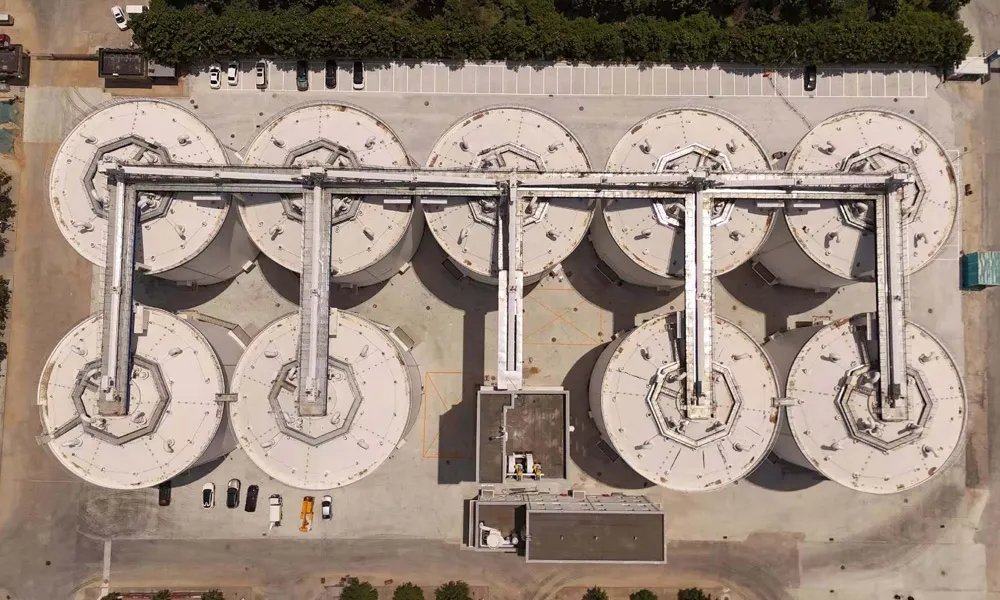
Wheat Silo Design & Storage Management
The steel silo is the core of the system. Aeration, monitoring, cleanout and handling are selected to support the actual wheat storage plan.
Steel Silo Structure & Engineering
DACHENG designs wheat storage silos around required capacity, storage duration, wheat bulk density and local wind, snow and seismic design requirements. Silo diameter, height, wall structure, galvanized steel specifications and roof configuration are selected to match each project’s structural and storage needs.
Wheat Storage Monitoring & Management
For wheat temperature variation, condensation and localized heating risks, the silo can integrate floor aeration, grain temperature monitoring, level measurement and grain condition monitoring. Loading, discharge, cleanout equipment and maintenance access are coordinated with the selected flat-bottom or hopper-bottom design.
Wheat receiving & optional pretreatment
DACHENG can integrate intake pits and pre-cleaning with the silo system. Where incoming wheat requires drying, dryer capacity and heat-source options can be evaluated based on moisture, throughput and site conditions; existing dryers can also be connected.
Conveying and discharge
Match bucket elevators, conveyors and discharge equipment to peak receiving rates and the flour mill or dispatch schedule.
Project interfaces
Review foundation, roof loads, dust-control points, utilities and future expansion at the design stage.
Choose the Right Wheat Silo Configuration
Flat-bottom and hopper-bottom silos serve different operating patterns. The most suitable configuration depends on storage duration, capacity, discharge frequency and the grain-handling layout.
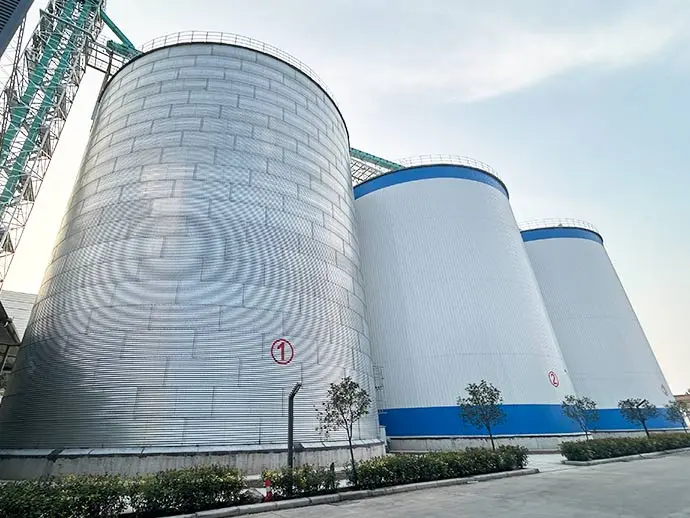
Flat Bottom Wheat Silo
Suitable for larger wheat inventories and longer storage cycles where aeration, cleaning access and a planned discharge system are important.
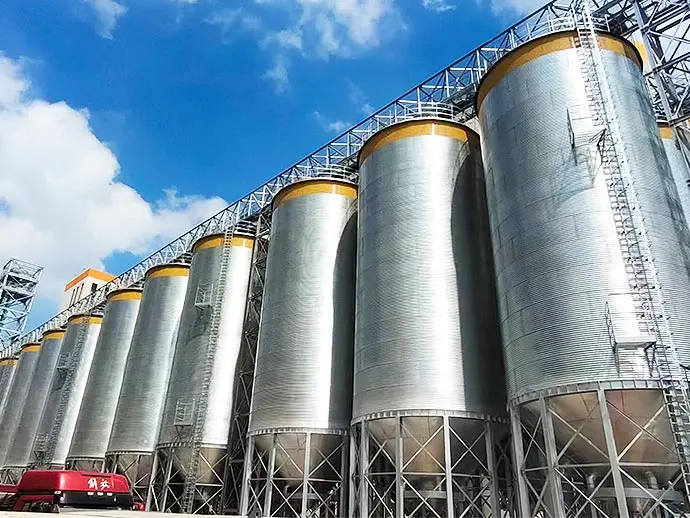
Hopper Bottom Wheat Silo
Often considered for smaller batches, frequent turnover and gravity discharge where the selected wheat properties and outlet geometry permit.
Technical Priorities for Wheat Storage
Aeration & airflow distribution
Airflow paths, fan selection and operating strategy should reflect wheat condition, silo geometry and local climate.
Temperature monitoring
Sensor placement and trend monitoring support earlier detection of abnormal grain heating.
Sealing & moisture management
Roof and wall interfaces, weather protection and condensation management matter for stored wheat quality.
Grain handling & dust control
Receiving, lifting, transfer and discharge equipment should be coordinated to reduce bottlenecks and control dust.
Inspection, cleaning & maintenance
Safe access, cleaning provisions and residual grain management help maintain storage hygiene.
Wheat Silo Applications
Flour mills
Provide raw-wheat buffer capacity between seasonal procurement and continuous milling operations.
Grain trading and collection centers
Support high-volume wheat intake, batch separation and outbound dispatch.
Strategic and commercial grain reserves
Plan storage groups around inspection, quality monitoring, controlled turnover and long-term operation.
Agricultural cooperatives
Combine local wheat collection with scalable storage and shared grain-handling equipment.
Wheat Storage Installations
Explore DACHENG wheat silo projects serving flour milling, grain procurement and large-scale raw-grain storage.
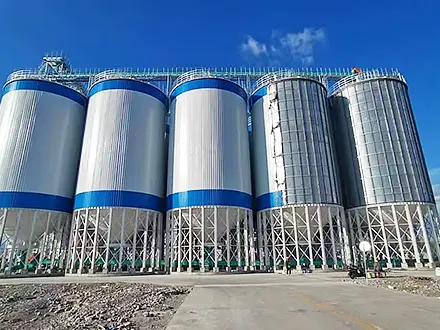
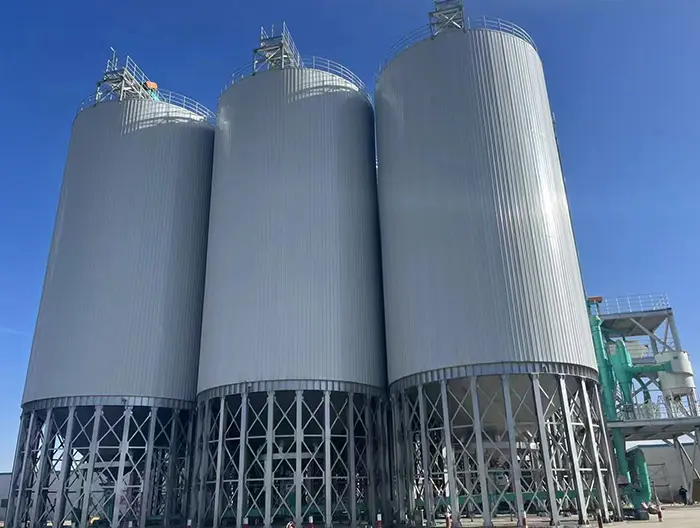
Wheat Storage for High-Volume Flour Milling
Ten 1,350-ton wheat silos support raw-grain storage for a large flour-processing operation with substantial annual wheat throughput.
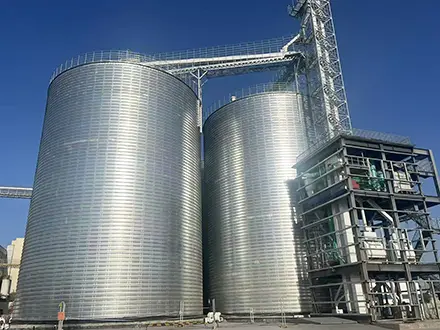
Wheat Procurement and Raw-Grain Reserves
Nine 1,500-ton wheat silos support raw-wheat reserves and grain handling for an integrated grain-processing operation.
Large-Scale Wheat Storage Silo Project
Ten 10,000-ton wheat silos support large-scale raw-grain storage alongside cleaning and flour-processing facilities.
Why Choose DACHENG for Wheat Storage?
DACHENG combines steel silo manufacturing with grain receiving, cleaning, conveying, aeration and monitoring system engineering. Customers can purchase a storage-focused system or request additional processing equipment, including drying where necessary, with coordinated capacity planning and project delivery.

Capacity and batch planning
Plan individual silo sizes and silo groups around harvest intake, flour-mill consumption, grain grades and future expansion.
Flexible handling and optional drying
Match receiving, cleaning, elevators, conveyors, aeration, monitoring and discharge to the operating plan. Add drying only where grain condition requires it, or connect to an existing drying line.
Manufacturing and technical coordination
Prepare drawings, material and component requirements, fabrication, inspections and foundation interfaces around the approved configuration.
Installation through commissioning
Coordinate installation guidance, equipment testing, operator training and handover documents as agreed in the contract.
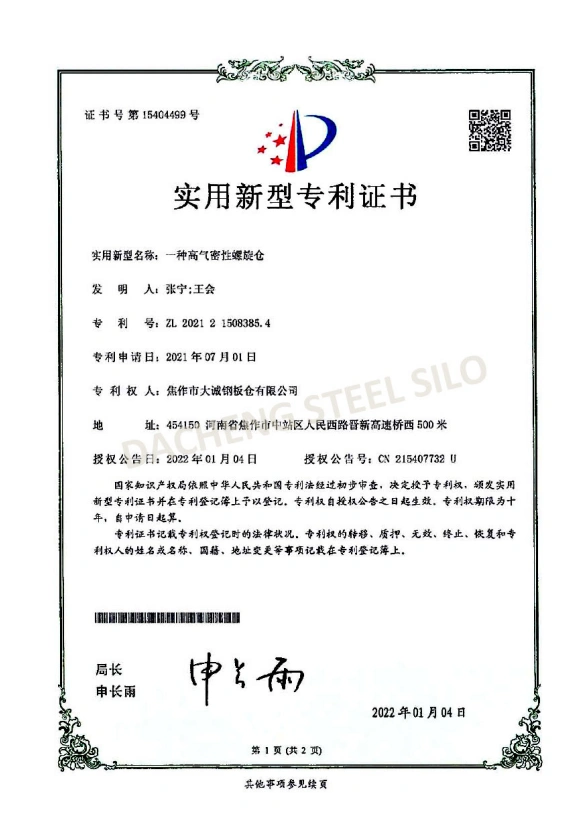
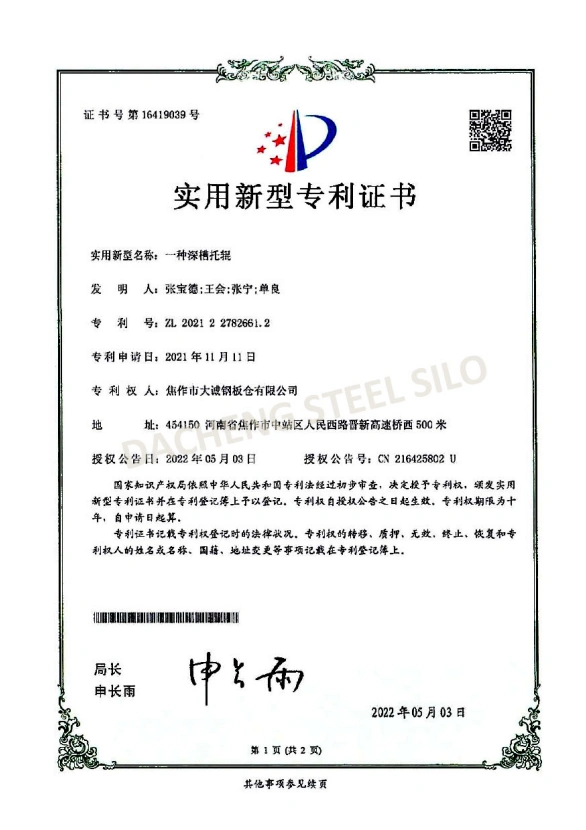
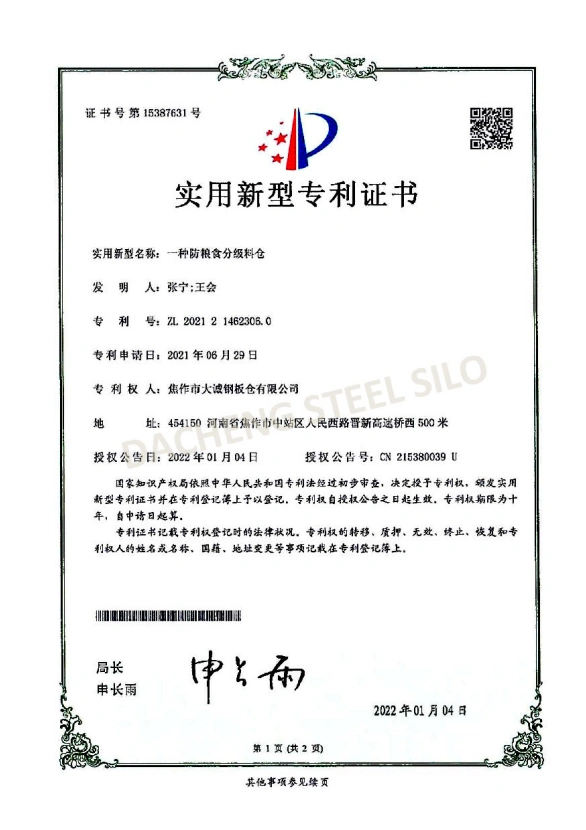
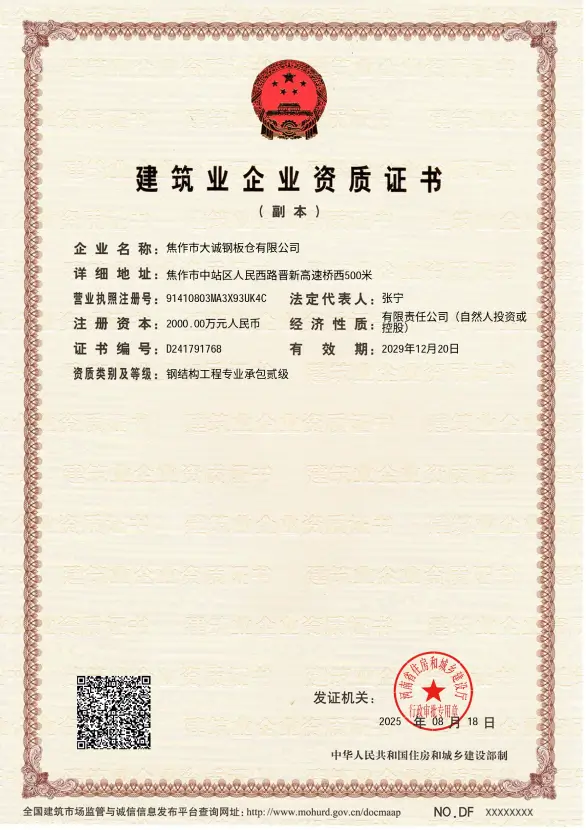
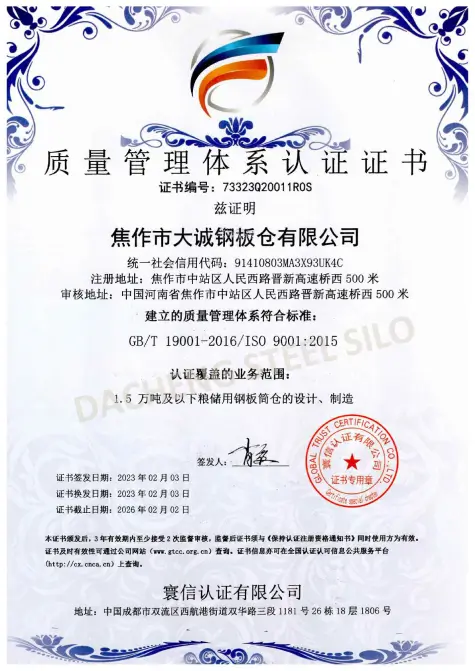
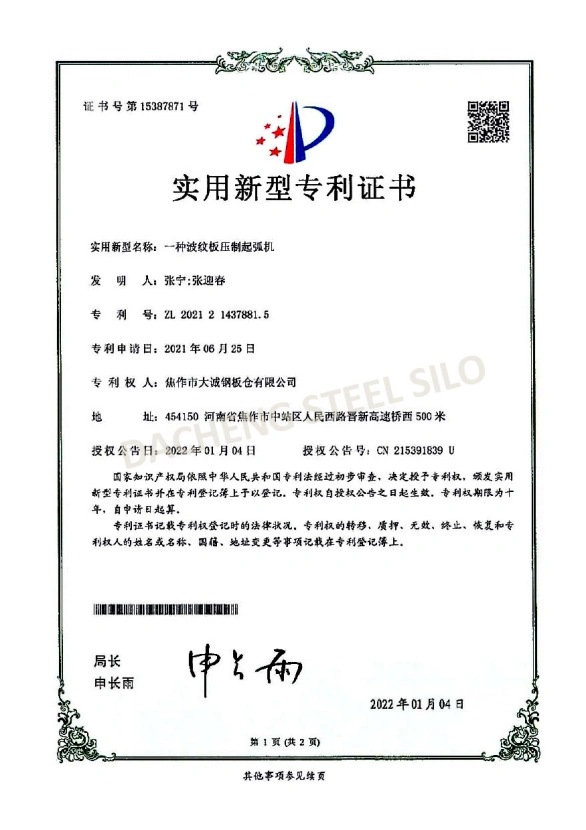
Company Qualifications & Certificates
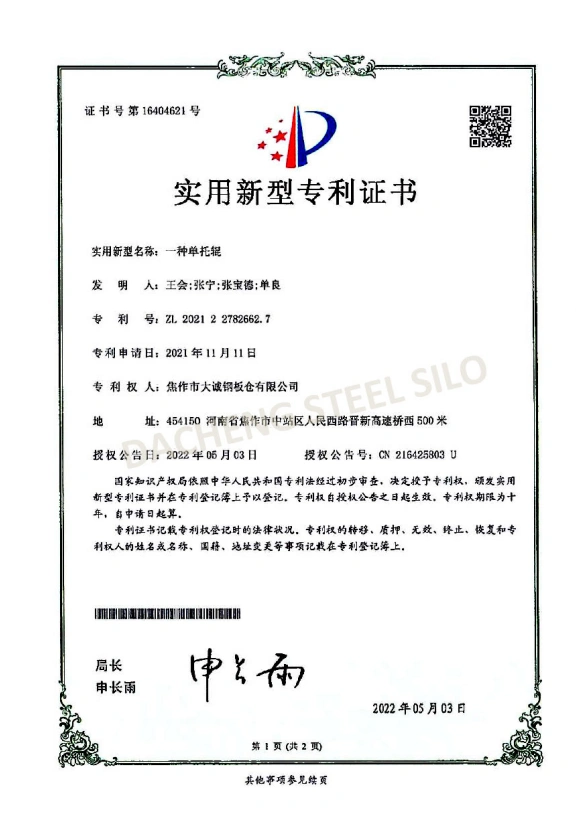
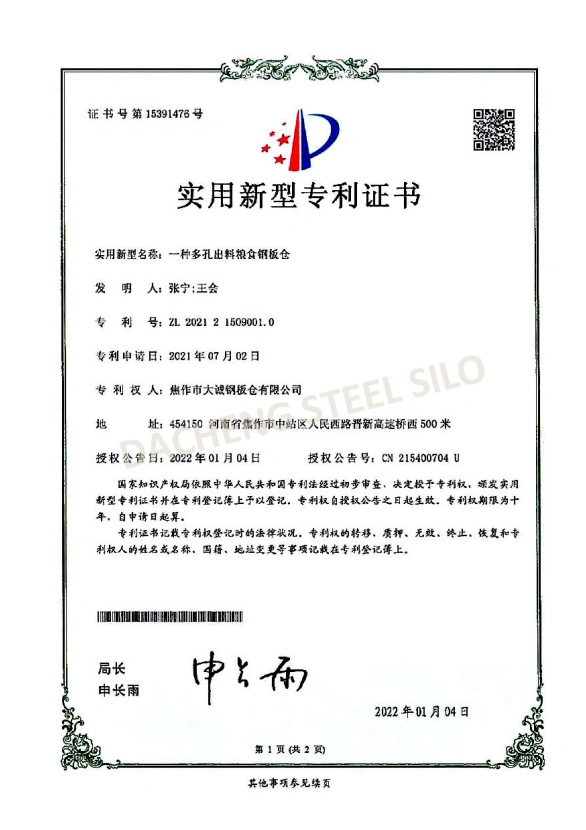
Explore DACHENG’s qualifications and industry honors, backed by our steel silo manufacturing and grain storage system capabilities.
Frequently Asked Questions
What is the best silo type for wheat storage?
There is no universal choice. Flat-bottom silos are commonly considered for larger, longer-term storage, while hopper-bottom designs can suit frequent discharge and smaller batches. Site layout and grain-handling requirements decide the final configuration.
Does a wheat silo need aeration and temperature monitoring?
These systems are commonly considered for commercial wheat storage, especially when grain is stored for extended periods. Final design depends on climate, grain condition and the storage plan.
Can DACHENG supply conveyors and other equipment?
DACHENG can integrate grain conveying, cleaning, aeration, monitoring and related equipment into the wheat storage system. The final scope is confirmed in the project quotation.
What information is needed for a quotation?
Provide wheat bulk density or quality data where available, required storage tonnage, number of silos, site location, receiving and discharge rates, expected storage duration and required supporting equipment.
Plan Your Wheat Storage Project
Share your wheat storage capacity, site location, receiving and discharge rates, and expected storage period. DACHENG can review suitable silo configurations and supporting systems.