


Spiral Steel SiloContinuous Lock-Seam Construction for Grain Storage
DACHENG · GRAIN STORAGE
DACHENG spiral steel silos use galvanized steel strip formed on site into a cylindrical wall. A continuous mechanically folded seam joins the strip edges, creating a distinct alternative to bolted-panel silo construction.
The silo can be planned with grain receiving, conveying, aeration, temperature monitoring and discharge equipment to suit the required capacity, commodity and operating conditions.
- Wheat
- Maize
- Paddy rice
- Soybeans
- Barley
- Sorghum
Technical Profile
Diameter and load ranges shown here are derived from the DACHENG TC model schedule. Final capacity, wall design, foundations and equipment configuration are confirmed for each project.
Spiral Lock-Seam Structure
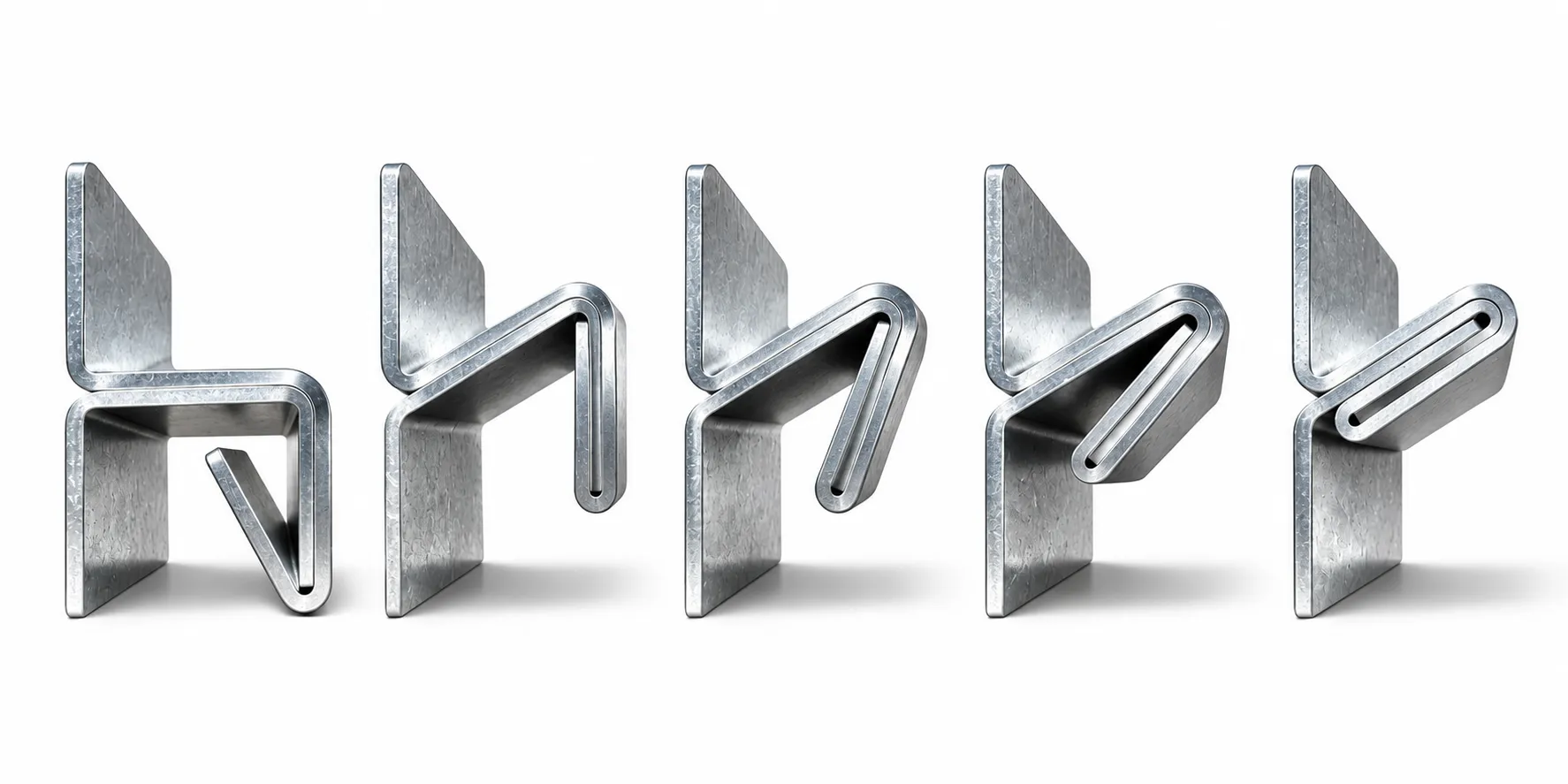
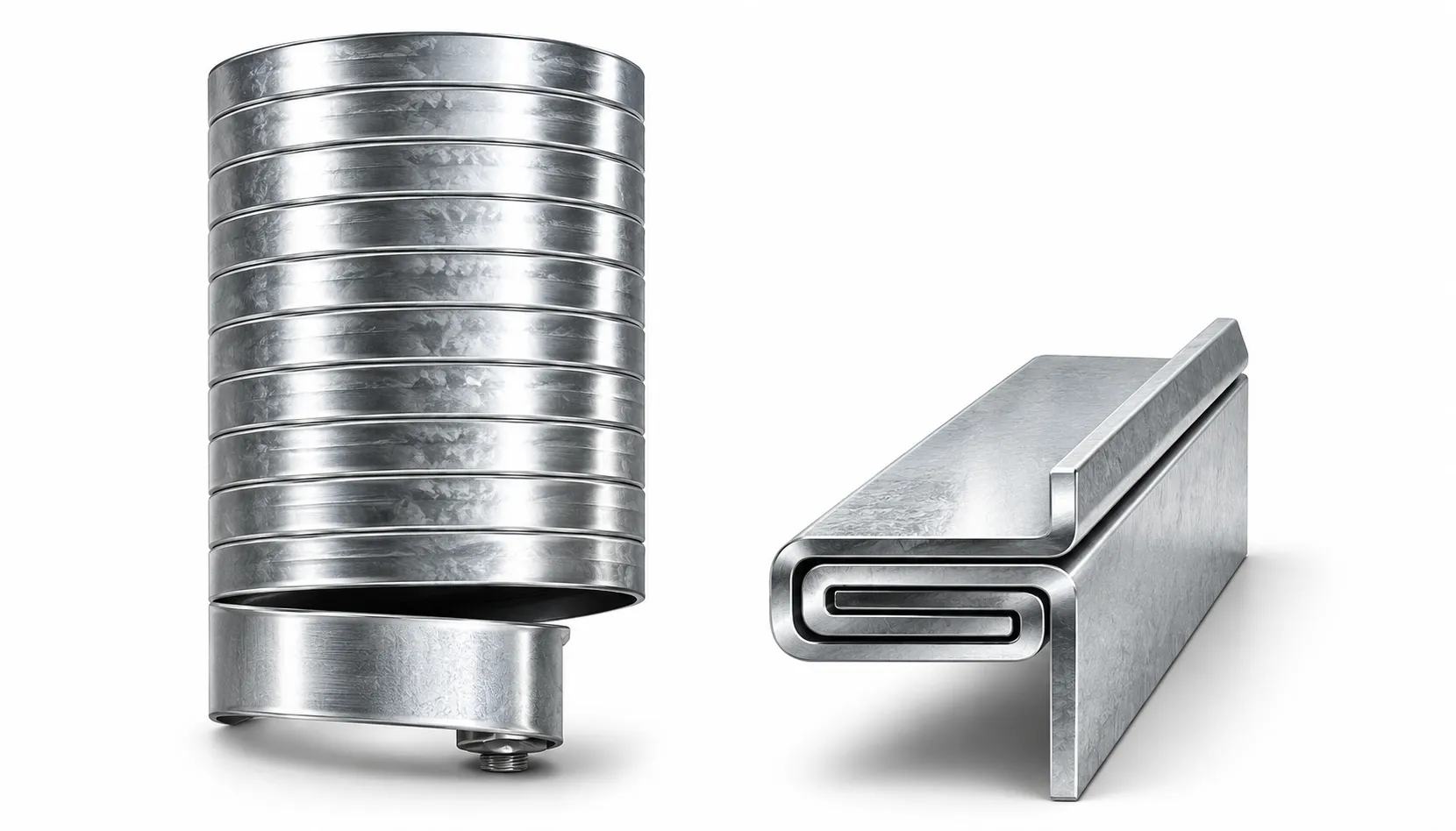
The mechanical lock seam is the defining construction detail of a spiral steel silo. Galvanized steel strip edges are progressively folded and interlocked to form a continuous helical joint.
Continuous Wall Joint
The seam connects adjacent steel strip edges without the regularly spaced wall-panel bolt joints used in bolted silo construction.
Engineering-Defined Profile
Joint geometry, steel thickness, material grade and connection details are established for the actual structural and storage requirements.
How the Spiral Silo Is Constructed
The distinctive feature is the continuous on-site forming process. These three stages describe the construction sequence at a practical level.
Steel Strip Forming
Galvanized steel strip is fed through a dedicated profiling machine at the site.
Continuous Lock Seaming
Adjacent strip edges are folded and mechanically interlocked to build the cylindrical shell.
Roof & Equipment Interfaces
The completed shell is integrated with the roof, foundation connection, access and grain-handling interfaces.
Key Advantages for Grain Storage
Fewer Wall-Panel Penetrations
Continuous mechanical lock-seam construction avoids the regularly spaced bolt holes of conventional panel-built silo walls. Roof, access and equipment connections still require appropriate sealing.
Continuous Wall Geometry
The helical seam forms a continuous wall profile. Steel grade, wall thickness, grain pressure and local wind or seismic requirements are considered in the structural design.
Efficient Site-Based Forming
Steel strip is shaped and joined using dedicated equipment at the project site, reducing dependence on assembling large numbers of individual wall panels.
Coordinated Grain Storage Operation
Aeration, grain-temperature monitoring, receiving, conveying and discharge equipment can be planned with the silo from the beginning, rather than treated as separate additions.
TC Series — Representative Specifications
The following representative models are selected from the DACHENG TC series. Total volume and nominal loading capacity are retained from the supplied schedule; loading figures correspond approximately to a reference bulk density of 0.75 t/m³.
Nominal loading is a planning reference, not a guarantee for every grain. Actual usable capacity depends on grain bulk density, moisture, fill level, roof geometry and project design.
| Model | Diameter (m) | Layers | Total volume (m³) | Nominal load (t) | Total height (m) |
|---|---|---|---|---|---|
| TC04510 | 4.584 | 10 | 192 | 144 | 12.62 |
| TC05510 | 5.500 | 10 | 280 | 210 | 12.89 |
| TC06410 | 6.417 | 10 | 384 | 288 | 13.15 |
| TC07310 | 7.334 | 10 | 505 | 379 | 13.42 |
| TC08210 | 8.25 | 10 | 645 | 483 | 13.68 |
| TC10010 | 10.084 | 10 | 977 | 733 | 14.21 |
| TC11010 | 11.001 | 10 | 1171 | 879 | 14.48 |
| TC11910 | 11.917 | 10 | 1385 | 1039 | 14.74 |
| TC12910 | 12.834 | 10 | 1617 | 1213 | 15 |
| TC12915 | 12.834 | 15 | 2341 | 1756 | 20.6 |
Choosing the Right Silo Construction
Spiral and bolted steel silos use different construction methods. Neither is automatically the best choice for every project.
Final selection should consider the whole grain storage system, not only the silo shell.
| Consideration | Spiral steel silo | Bolted steel silo |
|---|---|---|
| Wall construction | Continuous on-site forming with a mechanical spiral lock seam | Factory-made panels assembled with bolted joints |
| Site planning | Requires access and working space for forming equipment | Requires panel delivery, lifting and assembly space |
| Installation considerations | Equipment setup, forming sequence and seam detailing | Panel alignment, bolt installation and joint sealing |
| Best selection basis | Grain, capacity, site constraints and total system design | Grain, capacity, logistics and total system design |
Applications in Grain Storage
Grain Reserves & Long-Term Storage
For central and regional grain reserve facilities, spiral steel silos can be considered where the project requires substantial bulk storage, planned inventory rotation and ongoing grain-condition management. The storage design should coordinate usable capacity, ventilation, temperature monitoring, access and discharge arrangements.
Flour, Rice & Feed Processing Plants
Processing plants need a dependable supply of raw grain without interrupting production. Spiral silos can serve as receiving or buffer storage for wheat, maize, paddy rice and other bulk commodities, with inlet and outlet rates matched to cleaning, milling or feed-production lines.
Grain Collection, Logistics & Transit
At grain purchasing centers, logistics hubs and port-related facilities, storage must work with frequent truck or conveyor movements. Silo arrangement, receiving pits, bucket elevators, conveying routes and dispatch points should be planned together to reduce unnecessary material transfers.
Large Farms & Agricultural Cooperatives
Centralized storage can help larger farms and cooperatives organize harvested grain before processing or sale. Project planning should account for harvest peaks, grain moisture, drying requirements, available land, future expansion and access for on-site silo forming.
Oilseeds & Other Suitable Dry Bulk Grains
Soybeans, barley, sorghum and other suitable free-flowing agricultural commodities may be considered after checking bulk density, flow behavior, moisture and storage conditions. Grain-specific design and management remain essential.
DACHENG Manufacturing & Engineering
DACHENG connects steel silo manufacturing with the practical needs of a grain storage project. Capacity, grain characteristics, site access, structural interfaces and handling routes are considered together before the final configuration is agreed.

Factory Manufacturing Backed by Engineering
DACHENG combines steel silo manufacturing, component fabrication and engineering coordination. Production preparation follows approved drawings, material requirements and the agreed equipment configuration.
The factory has steel-structure manufacturing and machining equipment, including CNC processing, cutting and bending capabilities, supporting grain silo projects from fabrication through installation planning.
Steel Silo Manufacturing
Material selection, forming work and component preparation are aligned with the approved silo drawings, dimensions and connection requirements.
Engineering & Sizing
Grain type, bulk density, target capacity, site conditions and structural loading guide silo geometry, foundation and roof interfaces.
Grain Handling Integration
Receiving, elevating, conveying and discharge routes are coordinated, with aeration, monitoring and cleaning considered where required.
Quality & Delivery Coordination
Materials, component dimensions, connection details and installation requirements are checked against the project documents; the inspection and site-service scope is agreed per order.
Grain Storage Solutions for Overseas Projects
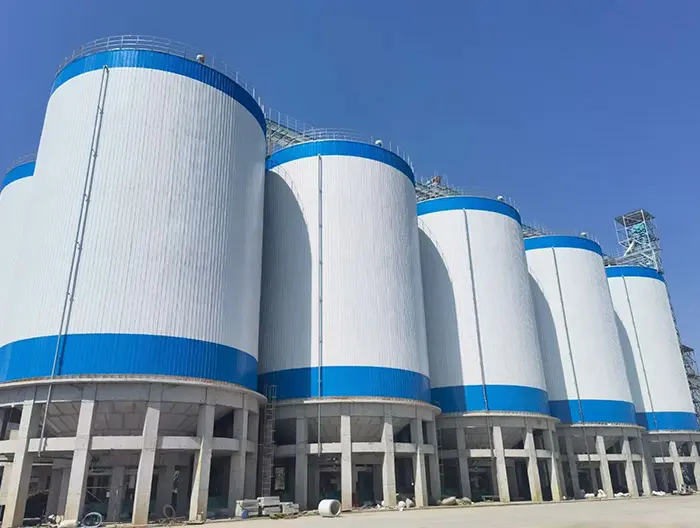
Planning a wheat, maize or rice storage facility outside China? DACHENG can share relevant project information and discuss silo capacity, conveying layout, site conditions and supporting equipment for your market.
Frequently Asked Questions
How do I choose a TC model?
Start with grain type, required tonnage, bulk density, site dimensions and the handling process. A final model should be confirmed against usable capacity and engineering design.
Are the listed tonnages the same for all grains?
No. They are reference values based on the original model schedule. Grain bulk density and operating conditions change the actual tonnage.
Can a spiral silo include aeration and temperature monitoring?
These functions can be considered in the project configuration. Equipment and layout depend on storage conditions and operating requirements.
Is a spiral silo better than a bolted silo?
Neither type is universally better. The choice depends on site conditions, construction logistics, required capacity and the storage system.
Request a Spiral Silo Configuration
Share the grain type, target capacity, project location, required filling and discharge rates, and any aeration or monitoring requirements.