




DACHENG · Grain Silo Manufacturer
Hopper Bottom Silo for Grain Storage & Feeding
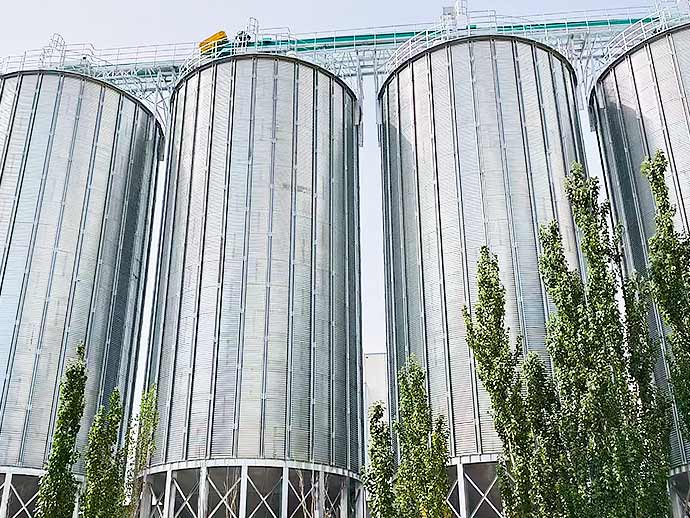
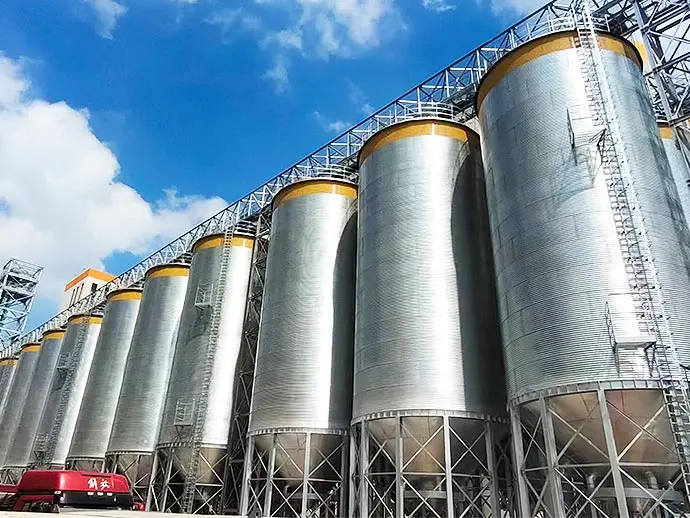
DACHENG designs and manufactures hopper bottom silos for grain storage, frequent unloading and process feeding. The conical hopper guides grain toward the outlet, while the elevated support structure provides space for discharge equipment beneath the silo.
Capacity, hopper design and handling equipment are coordinated around your grain and plant layout.
Grain Types
- Wheat
- Corn (maize)
- Paddy rice
- Soybeans
- Soymeal
- Barley
- Sorghum
For dry, free-flowing grain. Silo, aeration and discharge details are selected for the material’s bulk density, moisture content and flow properties.

Gravity Discharge
The conical bottom guides free-flowing grain toward the outlet for frequent unloading and process feeding.
Coordinated Discharge
Match the outlet, gates and conveyors to the required discharge rate and downstream process.
Space for Equipment
Set outlet clearance and support layout around the receiving equipment and maintenance access.
Hopper Bottom Silo Applications
Hopper bottom silos support raw-grain storage and process buffering at flour mills, rice mills, feed mills, grain and oilseed processing plants, breweries and distilleries. They can also serve grain collection stations, drying lines, farms, cooperatives and grain transfer facilities.
Hopper Bottom Silo Components

Galvanized Walls & Stiffeners
Prefabricated corrugated panels and vertical stiffeners form the main storage body, with specifications selected according to grain load and project design conditions.

Conical Hopper & Outlet
The hopper and discharge outlet are configured around grain flow characteristics, required discharge rate and the downstream conveying or processing equipment.
The supporting ring beam, steel frame and outlet clearance are coordinated with silo loads and the equipment below. Outlet clearance is confirmed separately from the body-and-roof height shown in the reference model table.
01 / Project Selection
Specify Your Hopper Bottom Silo
Start with the grain and operating requirements. DACHENG develops the silo configuration and equipment interfaces for your project.
| Selection item | Design basis |
|---|---|
| Model & capacity (t) | Selected for the grain, bulk density, target inventory and turnover cycle. |
| Diameter / body + roof height (m) | Representative TC-series dimensions can be used for initial layout planning. |
| Overall silo height | Confirmed after hopper depth, support frame and required outlet clearance are finalized. |
| Hopper & outlet | Hopper geometry and outlet size matched to material flow and discharge requirements. |
| Discharge destination | Tell us whether grain will feed a conveyor or processing line, or whether vehicle loading is required, so outlets and clearance can be reviewed. |
| Outlet clearance (m) | Space for gates, conveyors, maintenance access or project-specific loading arrangements. |
| Discharge rate (t/h) | Outlet, gate and conveyor capacity coordinated with the downstream process. |
| Materials & site loads | Coatings, structural members and foundations selected for the grain and local conditions. |
Representative TC Models
Selected core models for initial capacity and layout comparison.
| Model | Ref. Capacity (t) | Diameter (m) | Body + Roof Height (m) |
|---|---|---|---|
| TC05507 | ≈150 | ≈6 | ≈10 |
| TC07308 | ≈300 | ≈7 | ≈11 |
| TC09108 | ≈500 | ≈9 | ≈12 |
| TC10011 | ≈800 | ≈10 | ≈15 |
| TC10014 | ≈1,000 | ≈10 | ≈19 |
| TC11915 | ≈1,500 | ≈12 | ≈20 |
Reference capacity is based on the existing DACHENG TC-series table and rounded for initial selection. The listed height covers the cylindrical silo body and roof only; hopper, support frame and outlet clearance are added during project design. Final dimensions follow approved project drawings.
Storage weight depends on grain bulk density and usable volume. Overall height includes the hopper and supports; outlet clearance is specified separately. Final dimensions and equipment scope follow the confirmed project drawings and quotation.
02 / Grain Handling
Connect Storage with Grain Flow
Select the handling and storage systems needed for your operating cycle.
Filling & Conveying
Bucket elevators and chain conveyors connect receiving, cleaning and silo filling.
Controlled Discharge
Match gates and discharge conveyors to the outlet and required downstream feed rate.
Grain Condition Monitoring
Aeration and temperature monitoring can be configured for the grain, climate and storage period.
Access & Maintenance
Plan inspection access, platforms and space around the hopper and discharge equipment.
How a Hopper Bottom Silo Unloads
-
Gravity moves the grainGrain moves down the hopper toward the outlet when the discharge system operates.
-
Equipment transfers the flowThe gate and conveyor control transfer to the next process. Cleaning needs depend on grain condition and operating practice.
03 / DACHENG Manufacturing
Built In-House for Complete Silo Projects
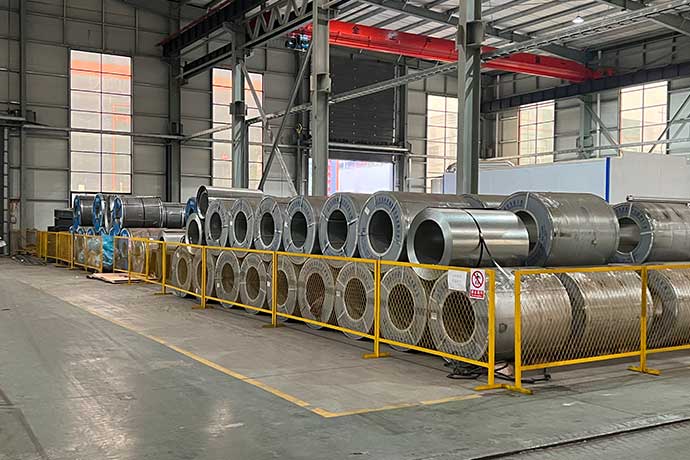
DACHENG is a high-tech steel-silo manufacturer integrating engineering, fabrication and installation. Its Jiaozuo manufacturing base covers more than 40,000 m², with two production workshops supporting silo structures, hopper and support components, and matching grain-handling equipment.

CNC & Forming Capacity
Production equipment includes CNC lathes, shearing and bending machines, laser cutting, punching equipment and an 800-ton press for steel components.
Anti-Corrosion Processing
Dedicated surface-treatment facilities include shot-blasting and coating processes for fabricated steel components, supporting corrosion protection before dispatch.
Complete-System Manufacturing
DACHENG manufactures silo structures together with bucket elevators, conveyors and other matching grain-handling equipment shown in its product catalogue.
Engineering & Site Support
Project scope can extend from process and civil-design coordination to manufacturing, installation, commissioning and operator training.
04 / Project References
Hopper Bottom Silo Project References
Reference projects showing hopper-bottom silo configurations for commercial wheat storage and grain-processing applications.

WHEAT STORAGE
Large-Capacity Hopper Bottom Silo Project
Commercial wheat storage application
- Silo-group capacity
- 13,500 t
10 × 1,350 t
Ten hopper-bottom silos provide a combined 13,500-tonne storage configuration, offering a practical reference for centralized wheat storage, frequent discharge and multi-silo layout planning.

WHEAT STORAGE
Multi-Silo Wheat Storage Project
Grain processing and storage application
- Silo-group capacity
- 6,000 t
4 × 1,500 t
Four 1,500-tonne hopper-bottom silos provide 6,000 tonnes of grouped storage capacity, combining gravity discharge with an elevated support structure for downstream grain handling.
05 / Before You Specify
Hopper Bottom Silo FAQ
What are the main components of the silo system?
A complete grain silo project can include the silo structure, receiving and discharge conveyors, grain cleaning and dust removal, aeration and temperature monitoring, electrical controls, and auxiliary equipment. The final configuration depends on storage capacity and operational needs.
Selection of silo materials?
Hot-dip galvanized corrugated steel is a common choice for grain storage. Stainless steel or higher-corrosion-resistance coatings may be considered for particular food-processing, coastal, humid, or other demanding environments.
How to determine grain silo capacity?
Start with your grain type, daily processing rate, target inventory period, and available site area. Capacity in tonnes also depends on the grain's bulk density, so the same silo volume can store different weights of wheat, corn, or paddy rice.
Differences between assembled flat-bottom steel silos and cone-bottom silos.
Flat-bottom silos are generally suited to larger-capacity and longer-term storage, often with sweep equipment for final emptying. Hopper-bottom silos use a conical outlet to support gravity discharge and are often selected for smaller volumes or frequent turnover. Both designs can use gravity for main discharge; compare capacity, emptying frequency and the complete unloading arrangement.
What is the significance of silo systems for grain storage?
Integrated silo systems can improve land-use efficiency and connect grain receiving, cleaning, storage, monitoring, and discharge. Depending on the equipment specified, they can support more consistent grain handling and reduce manual operations.
Does a hopper bottom silo still need cleaning?
Gravity discharge can reduce cleanout work, but it does not guarantee zero residue. Grain moisture, fines, flow properties and hopper design affect emptying; inspection and cleaning remain part of routine operation.
What affects the price of a hopper bottom silo?
Capacity, hopper and support design, materials, site loads, foundations, handling equipment and installation scope all affect cost. Compare quotations with the same equipment and service scope.
What information is needed for a proposal?
Send the grain type, bulk density and moisture content, target capacity, turnover cycle and project location. Include filling and discharge rates, the receiving method, required outlet clearance, a site plan and existing equipment details where available.
PROJECT ENQUIRY
Plan Your Hopper Bottom Silo Project
Share your grain, capacity, discharge rate and where the grain goes next. DACHENG will review the silo and equipment arrangement for your site.