


DACHENG · Grain Silo Manufacturer
Flat Bottom Silos for Bulk Grain Storage
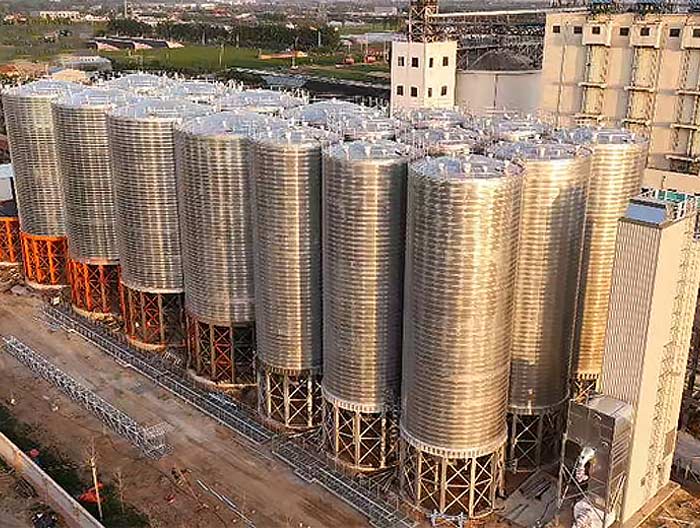
DACHENG designs and manufactures flat bottom grain silos for grain depots, flour mills and feed mills. We coordinate the silo structure with grain handling, aeration, monitoring and unloading, bringing the storage layout and equipment scope into one project plan.
Single-silo and multi-silo arrangements are developed around your grain type, target inventory and site conditions.
Grain Types
- Wheat
- Corn (maize)
- Paddy rice
- Soybeans
- Barley
- Sorghum
For dry, free-flowing grain. Silo, aeration and discharge details are selected for the material’s bulk density, moisture content and flow properties.

Galvanized Steel Structure
Corrugated wall sheets and reinforcing members are specified for the stored grain and project environment.
Modular Bolted Assembly
Prefabricated panels are assembled on site, with foundation and handling interfaces coordinated before installation.
Capacity & Layout Planning
Select silo diameter, height and quantity around storage demand, available land and future expansion.
Flat Bottom Silo Applications
Flat bottom silos provide bulk raw-grain storage for grain depots and traders, flour mills, rice mills, feed mills, grain and oilseed processors, distilleries and breweries, port grain terminals, and farms and agricultural storage projects.
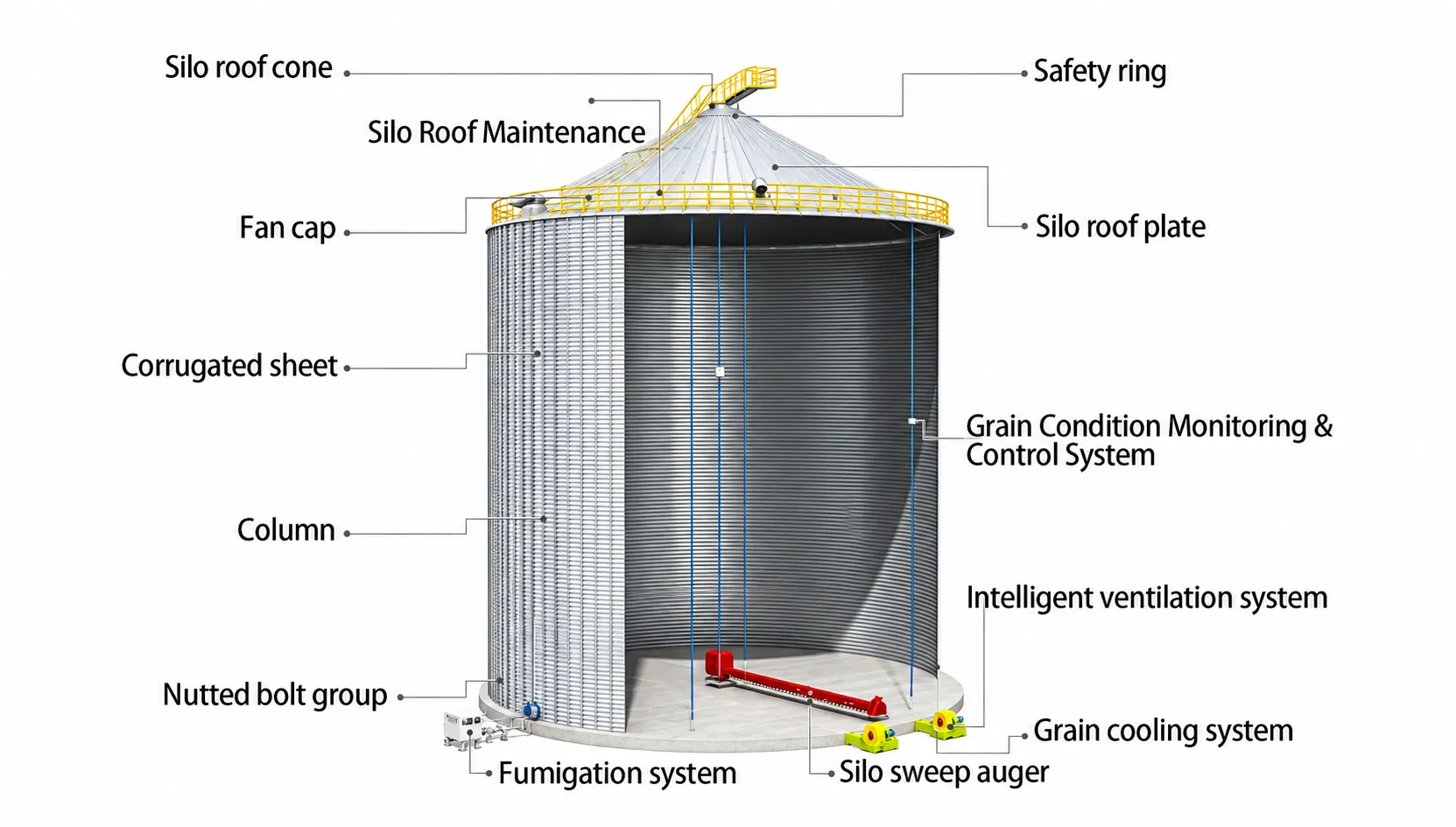
Flat Bottom Silo Structure
01 / Model Selection
Flat Bottom Silo Specifications
Selected reference models. Other project configurations can be reviewed with DACHENG.
| Model | Reference capacity (t) | Diameter (m) | Total height (m) |
|---|---|---|---|
| TC12917 | ≈ 2,000 | ≈ 13 | ≈ 23 |
| TC15517 | ≈ 3,000 | ≈ 16 | ≈ 24 |
| TC18321 | ≈ 5,000 | ≈ 18 | ≈ 29 |
| TC25621 | ≈ 10,000 | ≈ 26 | ≈ 31 |
| TC30 222 | ≈ 15,000 | ≈ 30 | ≈ 33 |
Reference capacities are per silo at approximately 0.75 t/m³; actual tonnage varies with grain bulk density and final design. Dimensions are rounded for initial selection; final specifications follow approved project drawings.
02 / Equipment Integration
A Connected Grain Storage System
Define the systems your operation needs. The quotation identifies the included equipment and project interfaces.
Filling & Conveying
Connect bucket elevators and conveyors to grain receiving, pre-cleaning and silo filling.
Aeration
Select fans and air distribution arrangements for the grain, climate and storage period.
Temperature Monitoring
Include grain temperature monitoring to support routine checks and storage management.
Discharge Equipment
Coordinate outlets, discharge conveyors and cleanout equipment with the required unloading rate.
How a Flat Bottom Silo Is Emptied
-
Main dischargeIn a typical arrangement, grain flows by gravity through the designed outlets into the unloading system.
-
Residual grain removalA sweep auger can move remaining grain toward the outlet. The operating sequence and equipment capacity are confirmed for the project.
03 / DACHENG Manufacturing
Manufacturing Behind Your Silo Project
At our Jiaozuo manufacturing facility, steel component fabrication is supported by project engineering and production checks. DACHENG coordinates the silo structure, supporting equipment and agreed installation scope, from drawing confirmation to commissioning support.


Workshop Fabrication
CNC shearing and bending, laser cutting and punching equipment support steel component fabrication.
Production Checks
Checks cover sheet thickness, coatings and component dimensions, followed by a final check before dispatch.
Project Engineering
Silo layouts, material specifications and foundation references are developed for the project requirements.
Installation & Handover
Installation guidance, commissioning and operator training can be included in the agreed scope.
04 / Project References
Flat Bottom Silo Projects
Reference projects showing flat bottom silo configurations for large-volume corn storage and flour-mill wheat supply.
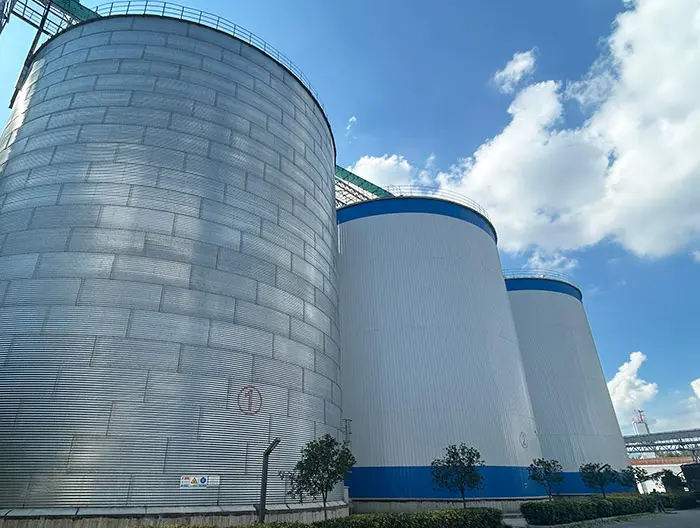
CORN STORAGE
Large-Capacity Corn Storage Project
Commercial bulk-grain storage application
- Silo-group capacity
- 15,000 t
3 × 5,000 t
Three 5,000-tonne flat bottom silos create a 15,000-tonne storage group, providing a practical reference for centralized receiving, batch storage and multi-silo site planning.

WHEAT / FLOUR MILL
Wheat Storage for a Flour Mill
Flour-milling raw-grain storage application
- Silo-group capacity
- 9,600 t
8 × 1,200 t
Eight 1,200-tonne flat bottom silos provide 9,600 tonnes of grouped wheat-storage capacity, offering a reference for flour mills that need multiple silos for raw-grain supply and inventory management.
05 / Before You Specify
Flat Bottom Silo FAQ
What are the main components of the silo system?
A complete grain silo project can include the silo structure, receiving and discharge conveyors, grain cleaning and dust removal, aeration and temperature monitoring, electrical controls, and auxiliary equipment. The final configuration depends on storage capacity and operational needs.
Selection of silo materials?
Hot-dip galvanized corrugated steel is a common choice for grain storage. Stainless steel or higher-corrosion-resistance coatings may be considered for particular food-processing, coastal, humid, or other demanding environments.
How to determine grain silo capacity?
Start with your grain type, daily processing rate, target inventory period, and available site area. Capacity in tonnes also depends on the grain's bulk density, so the same silo volume can store different weights of wheat, corn, or paddy rice.
Differences between assembled flat-bottom steel silos and cone-bottom silos.
Flat-bottom silos are generally suited to larger-capacity and longer-term storage, often with sweep equipment for final emptying. Hopper-bottom silos use a conical outlet to support gravity discharge and are often selected for smaller volumes or frequent turnover. Both designs can use gravity for main discharge; compare capacity, emptying frequency and the complete unloading arrangement.
What is the significance of silo systems for grain storage?
Integrated silo systems can improve land-use efficiency and connect grain receiving, cleaning, storage, monitoring, and discharge. Depending on the equipment specified, they can support more consistent grain handling and reduce manual operations.
What affects the price of a flat bottom silo?
Project cost depends on capacity, materials, local design requirements, foundations, handling equipment and installation scope, so compare quotations using the same equipment and service scope.
What information is needed for a proposal?
Send the grain type and moisture content, target capacity, intended storage duration and project location, plus any available site plan, required filling and discharge rates, and existing equipment details.
PROJECT ENQUIRY
Plan Your Flat Bottom Silo Project
Share your grain type, storage target and site location. Let’s define the silo layout, equipment and delivery scope.